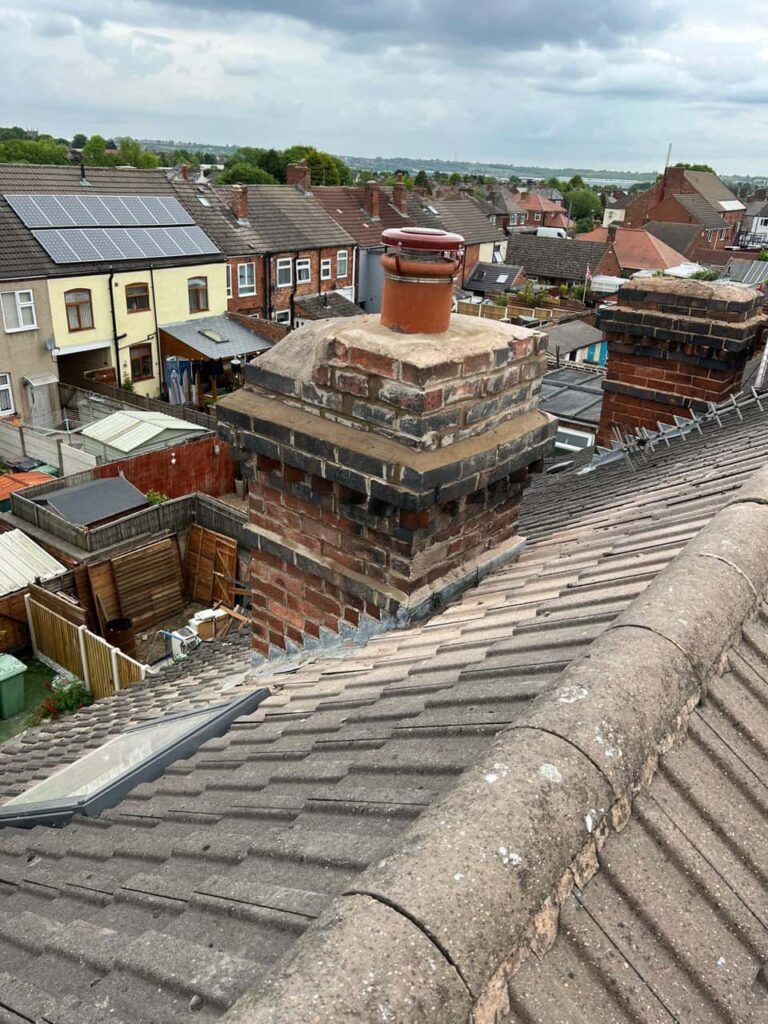
Strong winds place pressure on every part of a roofing system, but some areas are more exposed than others. Roof edges, junctions and projecting features experience particularly complex forces as air moves over and around the building. Heavy rain can then exploit small openings created by movement.
Damage is not always obvious from ground level. A tile may lift and settle back into place, flashing can separate slightly from a wall, and mortar may crack without immediately falling away. For property owners in Caterham, Surrey, understanding which areas are most vulnerable can help identify when a professional roof inspection would be worthwhile.
Roof Areas Commonly Affected by Wind and Storm Damage
Wind creates both direct pressure and suction across a roof. As it reaches an edge or change in direction, it can get beneath materials and place strain on their fixings.
Existing wear makes these areas more susceptible. A secure roofing component may withstand difficult weather, while one with a weakened fixing, small crack or deteriorated seal can move under the same conditions.
Eaves and Lower Roof Edges
The eaves form the lower edge of a pitched roof and are often among the first areas reached by upward-moving wind. If wind enters beneath a tile edge, it can create uplift that strains fixings and overlaps.
Damage at the eaves may involve:
- lifted or displaced tiles
- loosened underlay
- damaged battens
- disturbed eaves support
- movement in fascias or soffits
- rain being driven beneath the covering
Small changes at the lower edge can affect the way water enters the gutter and may expose materials not intended for prolonged weather exposure.
Verges and Gable Edges
The verge is the exposed edge of the roof at a gable. Because it forms a boundary between the covering and open air, it receives considerable wind pressure.
Mortared verges can crack or crumble, while mechanically fixed verge units may loosen if their fixings or adjoining materials are already weakened. Once an edge begins to move, wind may reach beneath neighbouring tiles and extend the affected area.
Fragments of mortar found below a roof can sometimes be an early indication that a verge needs inspection.
Ridge and Hip Tiles
Ridge tiles run along the highest point of the roof, while hip tiles cover external angles. Their elevated and exposed positions make them vulnerable during storms.
Strong winds can disturb the mortar or mechanical fixings that hold these components in place. A ridge or hip tile may remain seated even after its support has weakened, so the problem may not be evident until further movement occurs.
Cracked joints, uneven alignment and loose mortar should be assessed before another period of severe weather.
Tiles and Slates Across the Main Slopes
The central roof slopes are less exposed than some perimeter details, but they can still sustain damage. Wind can lift tiles or slates, loosen clips and nails, or cause brittle materials to crack around their fixing points.
A displaced unit may alter the protective overlap between neighbouring materials. This can create an entry route for wind-driven rain even when no tile is completely missing.
Older coverings with corroded fixings or deteriorated battens can be particularly vulnerable to repeated movement.
Valleys
Roof valleys collect water from adjoining slopes and direct it towards the gutter. During heavy rainfall, they may need to carry a substantial volume of water over a short period.
Storm debris can restrict the channel, while movement in nearby tiles can expose valley edges or damage their bedding. If water cannot flow freely, it may spread beneath the surrounding covering.
Because valleys are recessed and often difficult to view from the ground, deterioration can remain hidden until internal dampness appears.
Chimneys and Lead Flashing
Chimneys project above the roofline and interrupt the natural flow of wind. The surrounding leadwork must remain firmly dressed and sealed to prevent water entering at the junction between the chimney and roof.
Storms can lift flashing edges, loosen mortar joints or disturb tiles around the chimney. A small separation may admit water that then travels through the roof space before becoming visible indoors.
The chimney structure, pots and surrounding roof materials should therefore be considered together after severe weather.
Roof Vents, Pipes and Other Penetrations
Any component passing through the roof creates a junction that must remain weather-resistant. Wind can disturb seals, collars, flashing and nearby tiles around vents, pipes or other penetrations.
Heavy rain may then be driven into small openings. These defects can be difficult to identify because the visible internal stain may appear away from the original point of entry.
Flat-Roof Edges and Seams
Flat roofs are particularly dependent on secure perimeters, seams, outlets and upstands. Wind can create uplift at exposed edges and place strain on areas where materials join.
Potential storm-related defects include:
- lifted perimeter details
- separated seams
- disturbed flashing
- punctures from debris
- damaged outlets
- water collecting in low areas
A membrane can remain largely intact while a small failed junction allows moisture to travel beneath it.
Gutters, Fascias and Soffits
The roofline helps manage rainwater and protects the edges of the roof. Strong wind can loosen gutter brackets, displace sections of guttering or damage fascias and soffits.
A gutter that has moved may no longer fall correctly towards its outlet. Water can then overflow, collect against the roofline or soak surrounding materials.
Leaves and storm debris may also block gutters and outlets, so the system should be checked for both physical damage and restricted flow.
Signs That Storm Damage May Be Present
Possible warning signs include:
- uneven, lifted or missing tiles
- new pieces of slate, tile or mortar on the ground
- rattling sounds from the roof during wind
- damp patches following rainfall
- staining inside the roof space
- gutters that have moved or begun overflowing
- visible gaps around flashing
- debris trapped in valleys
- new daylight visible from inside the loft
A roof can still be damaged without displaying these symptoms. Where weather has been particularly severe, inspection may reveal loosened materials before they begin leaking.
Why Early Assessment Is Important
A slightly displaced tile or lifted flashing edge may initially admit very little water. Continued exposure can enlarge the opening, damage the underlay and affect supporting timber.
A professional assessment checks the roof as a connected system rather than focusing only on the most visible defect. This helps identify both immediate storm damage and surrounding materials that may have become unstable.
Conclusion
The most vulnerable parts of a roof during strong winds and storms are usually its edges, ridges, hips, valleys, junctions and projecting features. Tiles, flat-roof seams, flashing and roofline components can also sustain subtle damage without becoming immediately obvious.
If your roof in Caterham, Surrey has recently experienced severe weather, Caterham Roofing Repairs can inspect its exposed areas and recommend any necessary remedial work. Contact our team to arrange a professional roof assessment.
Call us on: 01883 770 797
Click here to find out more about Caterham Roofing Repairs
Click here to complete our contact form and see how we can help with your roofing needs.